
jueves, 26 de febrero de 2009


miércoles, 25 de febrero de 2009
Most rules are bent...
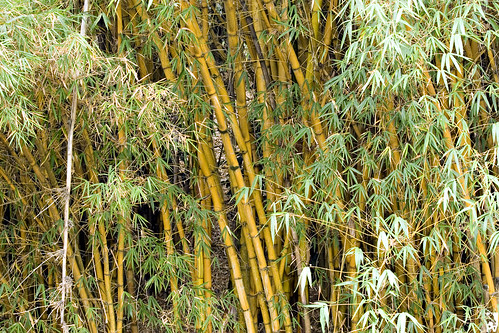
Bambu tarro (Guadua aculeata)
A simple vista la estructura del Bambú podría suponer que es una especie frágil y vulnerable, pero la delgadez de su tallo no es proporcional a su grado de resistencia y fortaleza. De hecho, esta cualidad, presente en una amplia variedad de las más de mil especies que se conocen de bambú, le ha valido la comparación con materiales tan resistentes como el hierro y el acero. Por su resistencia y versatilidad, al bambú se le ha otorgado una gran diversidad de usos, además de representar una excelente alternativa para atender la creciente demanda de productos forestales.
El Bambú, cuyo origen se remonta al comienzo de la civilización en Asia, es utilizado como fibra para fabricar papel de alta resistencia, en la elaboración de muebles, artesanías y artículos de decoración.
Es una excelente opción para construir casas-habitación. En la actualidad existen estudios que comprueban que las propiedades físicas y mecánicas de esta planta son similares y en algunos casos superiores a las del hierro. Esto le ha merecido el nombre de “El acero vegetal”. Por su valor escénico, comodidad y propiedades térmicas y aislantes, es cada vez mayor su demanda en construcciones dedicadas al ecoturismo.
Uno de los grandes atractivos de esta especie es que se desarrolla muy rápidamente y no necesita replantarse después del corte, por lo que su producción es permanente.
El bambú también es notable en cuanto a los beneficios ambientales que proporciona: contribuye a la protección de otros recursos naturales; previene y combate la erosión, deslaves, derrumbes y remociones; mejora el proceso de fijación de nitrógeno en el suelo. Se estima que una plantación de bambú de una hectárea de extensión puede absorber hasta 7 toneladas de carbono anualmente y aporta hasta un 35 por ciento más de oxígeno. Es un gran recuperador de las cuencas hidrológicas de los ríos y lagunas. Durante el verano toma agua para almacenar tanto en sus raíces como en el tallo y luego, por efectos de concentración, el agua es regresada nuevamente al caudal de los ríos o quebradas en época de secas. También disminuye la pérdida de agua por evaporación.
___________________________________________________________
In plain sight, Bamboo's structure might give the mistaken impression of a frail and vulnerable species, but in reality, the thinness of its trunk is not proportional to its degree of resistence and strength. As a matter of fact, this quality, present in most bamboo species, has given it a wide array of uses, besides becoming and excellent agroforestry alternative.
Bamboo, which origins go back to the beginning of civilization in Asia, is used as fiber in the manufacture of high-resistence paper, furniture, handcrafts and decorative articles.
It is, also, an excellent alternative for building homes. There are several studies that prove that bamboo's physical and mechanical properties are similar, and in some cases even superior, to those of iron. This has given the plant the nickname of "Nature's steel". For its decorative value, its comfortability and thermal properties it's use is growing, specially in the eco-tourism industry.
In addition, bamboo is quite notable regarding its environmental qualities and contributions. It protects basins and prevents erosion, it improves the nitrogen fixating process in the soil, it is estimated that one hectare of bamboo can recycle 7 metric tons of carbon per year and it contributes about 35% more oxygen to the environment. During the dry season, the plant saves water in its roots and trunk, and by effect of concentration the water returns to the soil during the dry season.
martes, 24 de febrero de 2009
Casta Susana
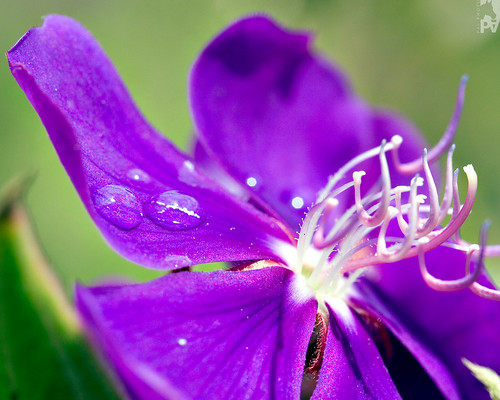
Tibouchina sp
La casta Susana es la célebre protagonista del libro de Daniel, que gracias a éste se libró de ser lapidada. Era Susana de familia acomodada y tenía un magnífico jardín en el cautiverio de Babilonia. He aquí que dos ancianos jueces de Israel estaban prendados de su belleza y sin saber nada el uno del otro, la espiaban de continuo por ver si podían sorprenderla y cumplir sus deseos. Un día que Susana se estaba bañando en su jardín, coincidieron allí los dos ancianos, espiándola, y al ver que no había nadie más, se dirigieron hacia ella instándola para que se les entregase. No quiso aceptar de ninguna manera. Los viejos, que no estaban dispuestos a soltar su presa, la amenazaron con acusarla de que la habían sorprendido con un joven. Pero no cedió a las amenazas, que cumplieron finalmente los viejos. Al ser ellos jueces, todo el mundo les creyó, por más que la joven Susana iba llorando y proclamando su inocencia. Cuando la llevaban a ser lapidada, se cruzó Daniel con la comitiva y conociendo la doblez de los viejos, les interrogó por separado delante de todo el pueblo: ¿Bajo qué árbol la viste pecando? "Bajo un lentisco", contestó el primero. Y cuando interrogó al otro, dijo: "Bajo una encina" con lo que todo el pueblo conoció su impostura y arrojó sobre ellos las piedras que tenía preparadas para lapidar a la casta Susana. La fiesta de Santa Susana se celebra el 24 de mayo o el 11 de Agosto.
________________________________________________________________________________
Chaste Susan is the well-known starring saint from the Book of Daniel, who was saved from being lapidated thanks to Daniel's intervention. Susan came from a well to do family, and had a magnificent garden in the captivity of Babilon. It happened that two old justices of Israel were infatuated with her beauty, without knowing about each other. They spied on her continually, trying to surprise her to fullfill their wishes. One day Susan was bathing in the garden and the two old justices coincided spying on her. When they realized there was no one else around, they walked towards her, enticing her to satisfy their wishes, to which she did not accept. The two old justices, unwilling to let their prey go, threatened to accuse her of having laid with a young man. She did not budge to the threats. The justices' threats came to fruition and as they were Justices of Israel the people believed the charges against Susan. When she was being taken to be lapidated, Daniel crossed the procession and knowing the judges duplicity interrogated them publicly. Without each judge being present in the other's interrogation, Daniel asked each of them "Under which tree did you see her sin?" Each of the judges gave a different answer to which the town say the old justices had lied and threw the stones unto them. Susan's feas is celebrated on May 24th or August 11th.
lunes, 23 de febrero de 2009
sábado, 21 de febrero de 2009
viernes, 20 de febrero de 2009
jueves, 19 de febrero de 2009
Suscribirse a:
Entradas (Atom)