
jueves, 19 de febrero de 2009


miércoles, 18 de febrero de 2009

martes, 17 de febrero de 2009
Flor de Aguacate - Avocado flower
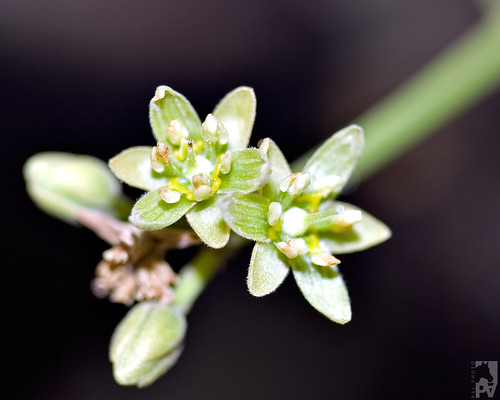
Persea americana
El aguacate o palto (Persea americana) es un árbol originario de América perteneciente a la familia de las lauráceas. Su fruto se conoce como aguacate o palta.
Es probablemente originario del sur de Chiapas y Guatemala. Antes de la llegada de los europeos se cultivaba desde el río Bravo (norte de México) hasta Chile. Puede alcanzar 20 m de altura.
Su fruto, comestible, recibe el nombre de "aguacate", "palta", "cura", "avocado" o "abacate" según las regiones. Se divide en tres "razas": mexicana, guatemalteca y antillana.
Los aguacates originados en las zonas altas del centro y este de México generan la Raza Mexicana. Los de las zonas altas de Guatemala generan la Raza Guatemalteca, y la Raza Antillana proviene de las primeras plantas encontradas en Las Antillas.
______________________________________________________________________
The avocado (Persea americana), also known as palta or aguacate (Spanish), butter pear or alligator pear, is a tree native to Mexico, South America and Central America, classified in the flowering plant family Lauraceae. The name "avocado" also refers to the fruit (technically a large berry) of the tree that contains a pit (hard seed casing) which may be egg-shaped or spherical.
Avocados are a commercially valuable crop whose trees and fruit are cultivated in tropical climates throughout the world (and some temperate ones, such as California), producing a green-skinned, pear-shaped fruit that ripens after harvesting. Trees are partially self-pollinating and often are propagated through grafting to maintain a predictable quality and quantity of the fruit. After the seed is planted, it takes about two to six weeks to sprout.
lunes, 16 de febrero de 2009
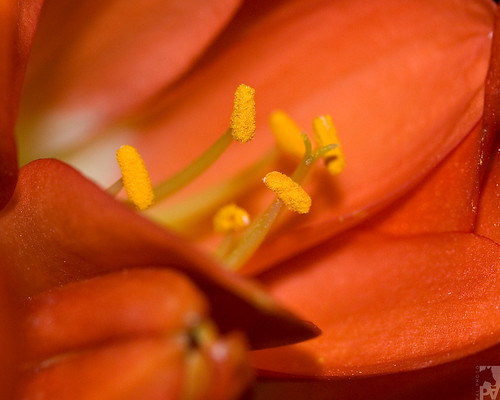
Clivia spp
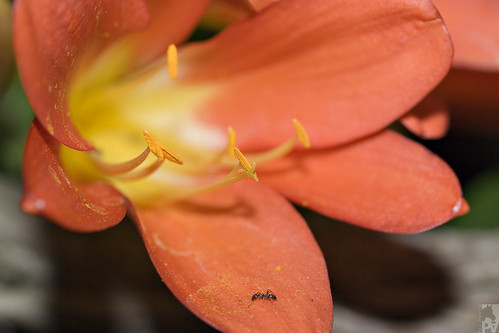
Clivia es un género de monocotiledóneas oriundas de África meridional. Son perennes no leñosas, con hojas de color verde oscuro, largas y estrechas que producen racimos de flores acampanadas rojas o anaranjadas al final de un largo tallo, asemejándose a los lirios. De las 6 especies conocidas, Clivia miniata y sus variedades híbridas son las más ampliamente cultivadas, con flores que oscilan entre el rojo anaranjado oscuro al amarillo pálido.
Se cultivan particularmente en Bélgica, Francia y China. Son plantas acaules, imperfectamente bulbosas, provistas de gruesas raíces fasciculadas. Las hojas son lineal-oblongas, planas, coriáceas. Las flores son hermafroditas, actinomorfas o ligeramente zigomorfas. El perigonio está compuesto por 6 tépalos unidos en la base formando un corto tubo y los segmentos son extendidos o rectos. El androceo está formado por 6 estambres, insertos en la garganta del perigonio, los filamentos son filiformes y las anteras son oblongas, dorsifijas. El ovario es ínfero, trilocular, con los lóculos 3-5 ovulados. El estilo es filiforme y el estigma es tripartido. El fruto es una baya globosa. Las flores se disponen en umbelas plurifloras en la extremidad de un escapo central, plano, áfilo, algo más largo que las hojas.
_____________________________________________________________________________
Clivia is a genus of monocot flowering plants native to southern Africa. They are from the family Amaryllidaceae. Common names include Kaffir lily and bush lily.
They are herbaceous evergreen plants, with dark green, strap-like leaves. Flowers are bell-shaped flowers on a stalk above the foliage, and they are borne in whites through yellow to red colours.
Of the six known species, Clivia miniata is the most widely cultivated, and hybrid varieties with flowers ranging from deep red-orange to pale yellow have been bred by growers.
C. miniata, C. gardenii, C. robusta and C. caulescens seedlings flower after three to four years, while the yellow varieties may take longer. C. nobilis will flower after seven or eight years. It is reported that C. mirabilis also takes about 6 years to flower.
Specimens were gathered by British explorers William Burchell and John Bowie in 1815 and 1820, respectively. Clivia nobilis became the first named species when in 1828 the Kew botanist John Lindley named it in honor of Lady Charlotte Florentia Clive, Duchess of Northumberland (1787-1866), who was for a time the governess of the future Queen Victoria.
domingo, 15 de febrero de 2009
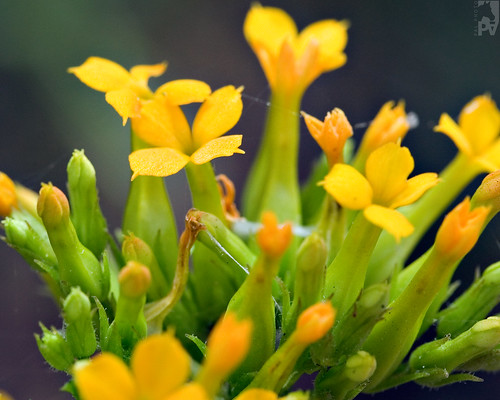
A new look
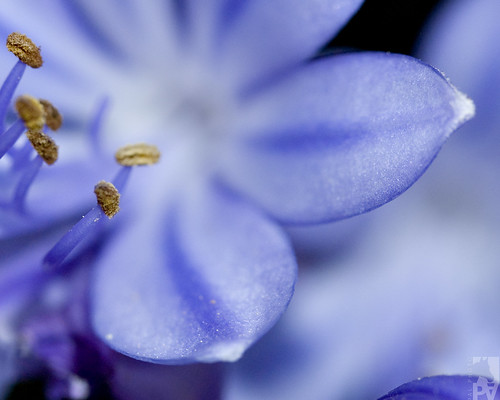
Las agapantáceas (Agapanthaceae F.Voigt ) son una familia de plantas monocotiledóneas perteneciente al orden Asparagales y que no incluye más que un sólo género, Agapanthus L'Hér.. Son plantas herbáceas, rizomatosas, bastante robustas, endémicas de Sudáfrica, que pueden ser fácilmente reconocidas por sus hojas acintadas, planas, bastante carnosas; por su inflorescencia en umbela en la extremidad de un largo escapo y por sus flores generalmente grandes con ovario súpero.
En las clasificaciones tradicionales de las angiospermas, Agapanthus se disponía dentro de una amplia circunscripción de las liliáceas y actualmente algunos botánicos lo continúan tratando de ese modo. No obstante, los análisis filogenéticos basados en el ADN y varios caracteres morfológicos indican que esta familia está separada no sólo de la circunscripción actual de las liliáceas, sino también de otras dos familias estrechamente relacionadas: las aliáceas y las amarilidáceas. Por esa razón, ha sido reconocida como una familia separada.
_____________________________________________________________________
Agapanthaceae is the botanical name of a family of flowering plants. The sole included genus, and the one from which the family takes its name, is Agapanthus. This genus has been variously included in Amaryllidaceae (e.g., Fay & Chase 1996), Alliaceae (e.g., the Dahlgren system and APG II system), or Liliaceae (e.g., in the Cronquist system, which unlike most classification systems included both Alliaceae and Amaryllidaceae in a broadly defined Liliaceae). Agapanthus shares characters with genera included in both Alliaceae and Amaryllidaceae, but lacks the compounds that give alliaceous plants their characteristic onion or garlic odor, and has superior ovaries, unlike the usually inferior ovaries of Amaryllidaceae.
Fay & Chase (1996) recommend the recognition of Agapanthus as a subfamily, Agapanthoideae, in Amaryllidaceae. The APG II system (2003) prefers the inclusion of both Amaryllidaceae and Agapanthaceae in Alliaceae but allows for the optional separation of the three families, placing them in the order Asparagales, in the monocots clade.
Suscribirse a:
Entradas (Atom)